Your library stays yours
This is less a separate feature than the argument the rest of Kanora is built around. If the app cannot tell you where the files live, what happens when rights deals change, whether the collection can survive a subscription ending, or who is actually in control of access, then the more elegant parts of the interface are mostly decoration.
A product stance that treats music as something you can keep, organise, move, lend, and live with over time rather than as a temporary entitlement granted by a service.
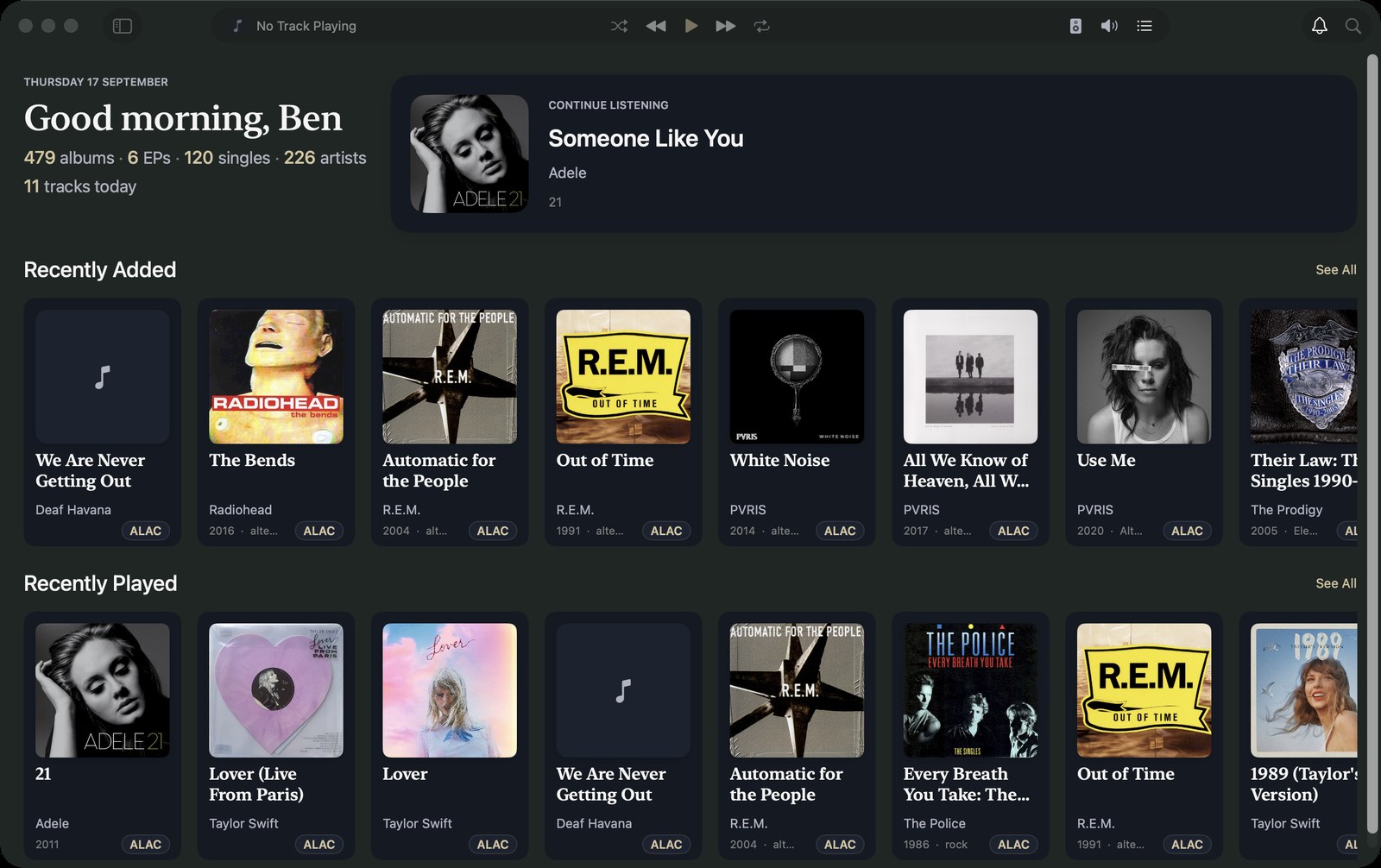
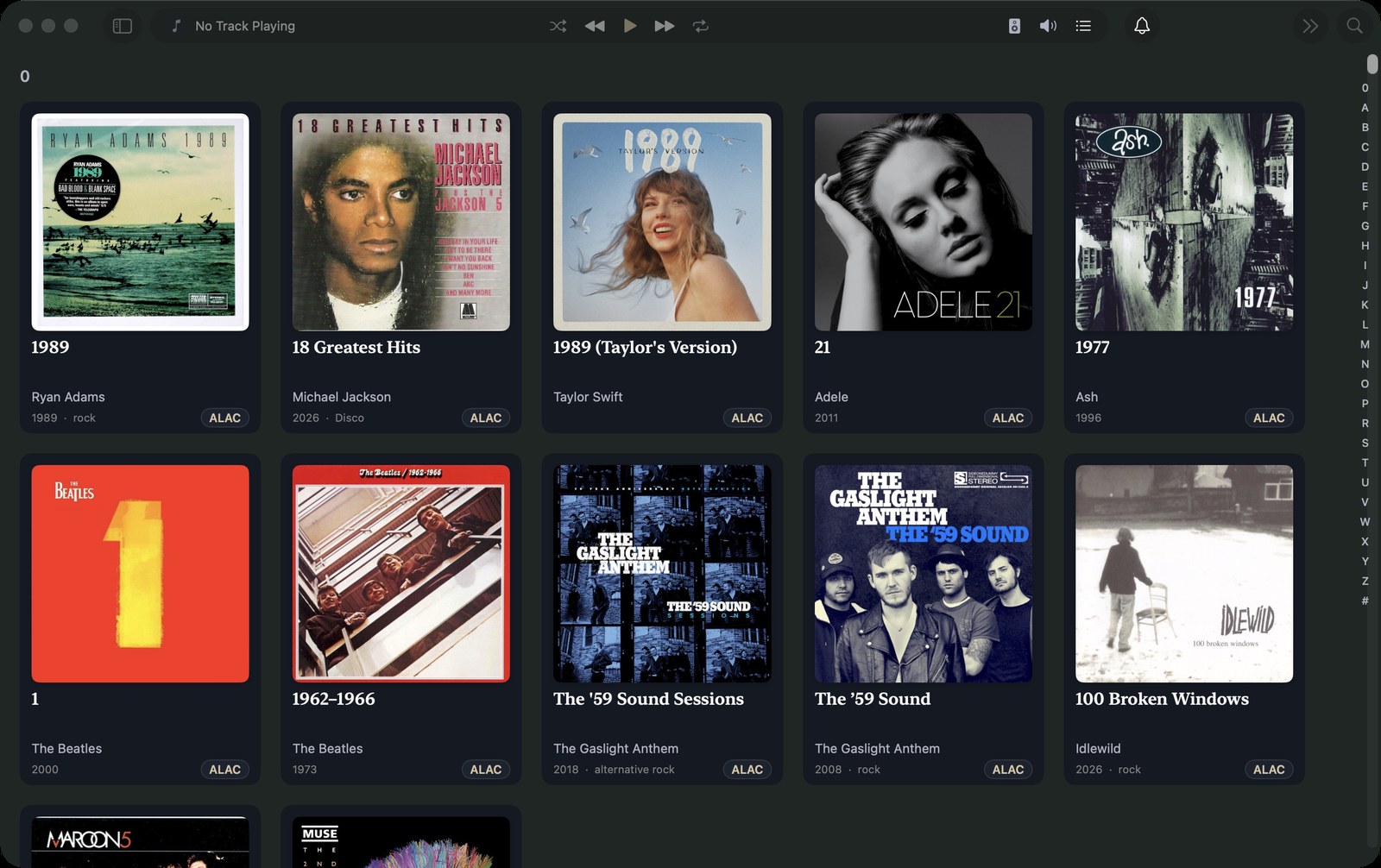
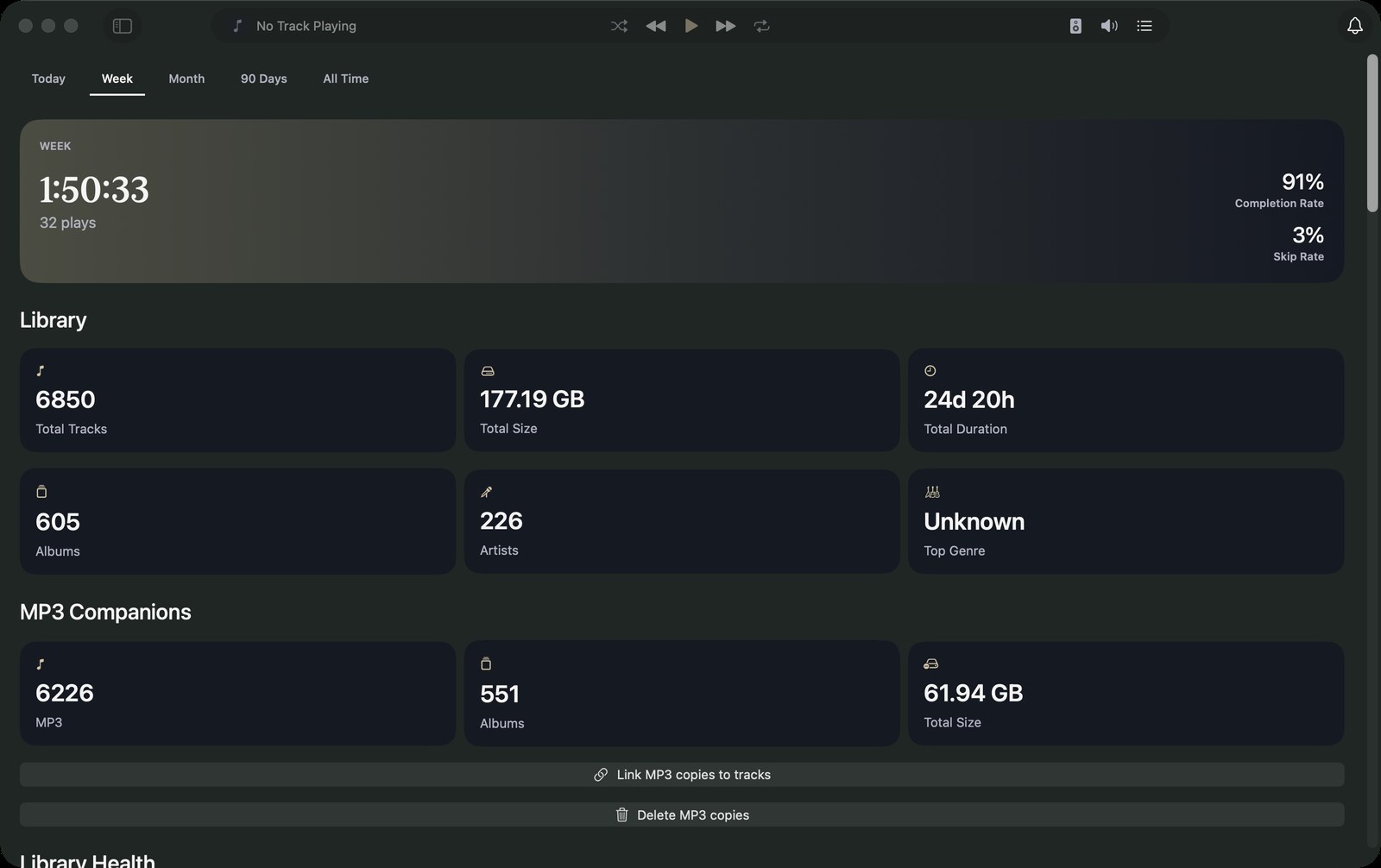
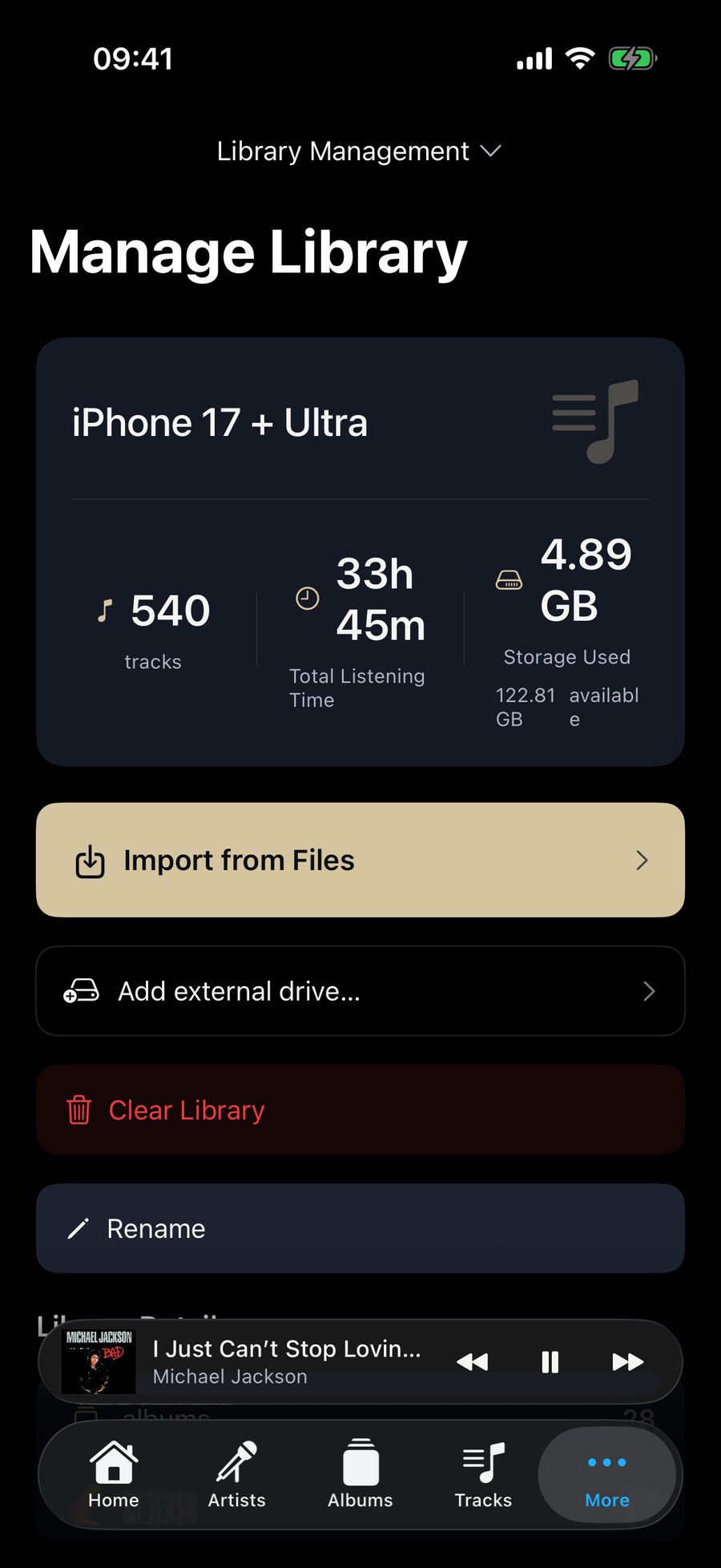
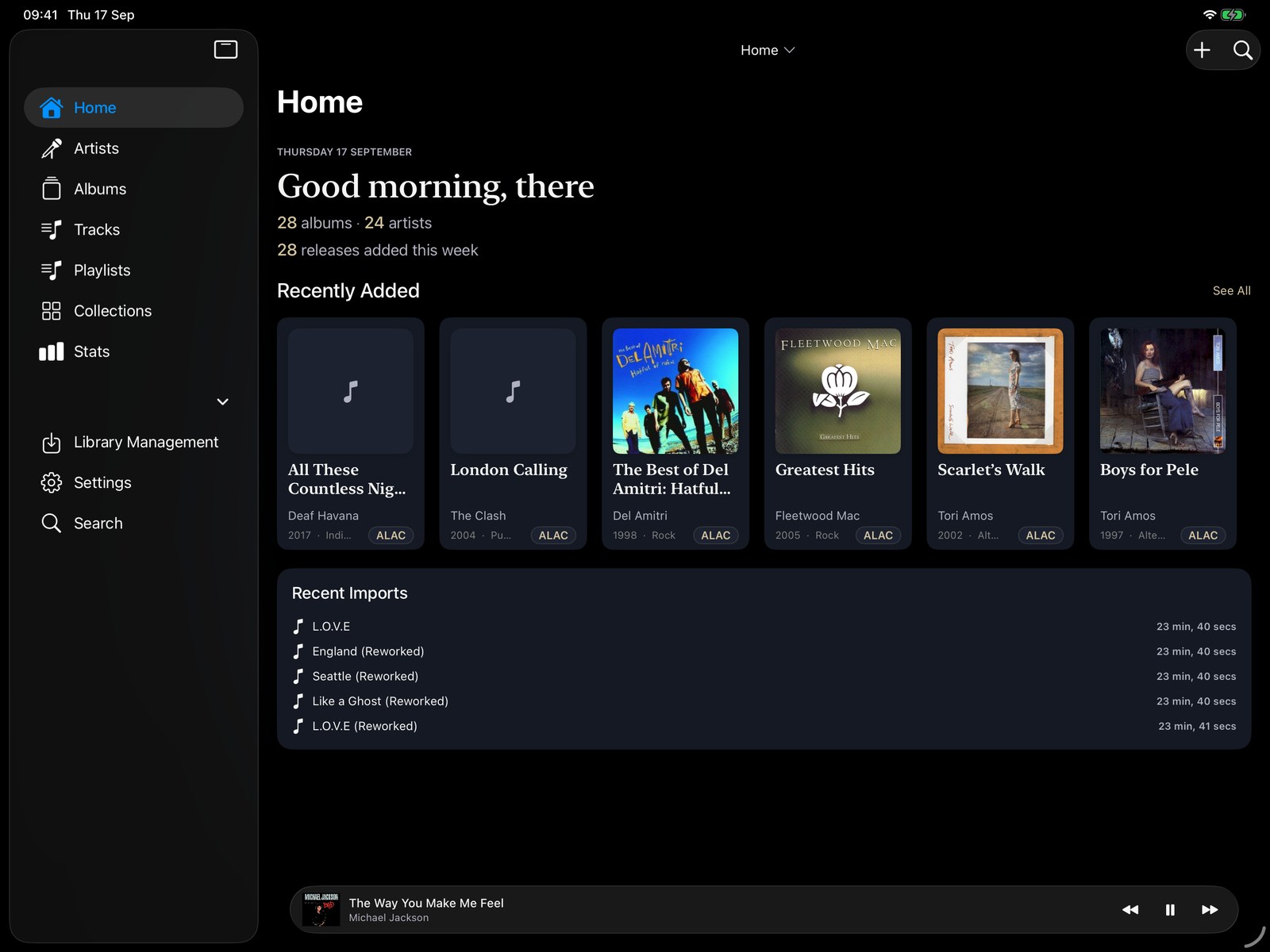
What it looks like today.
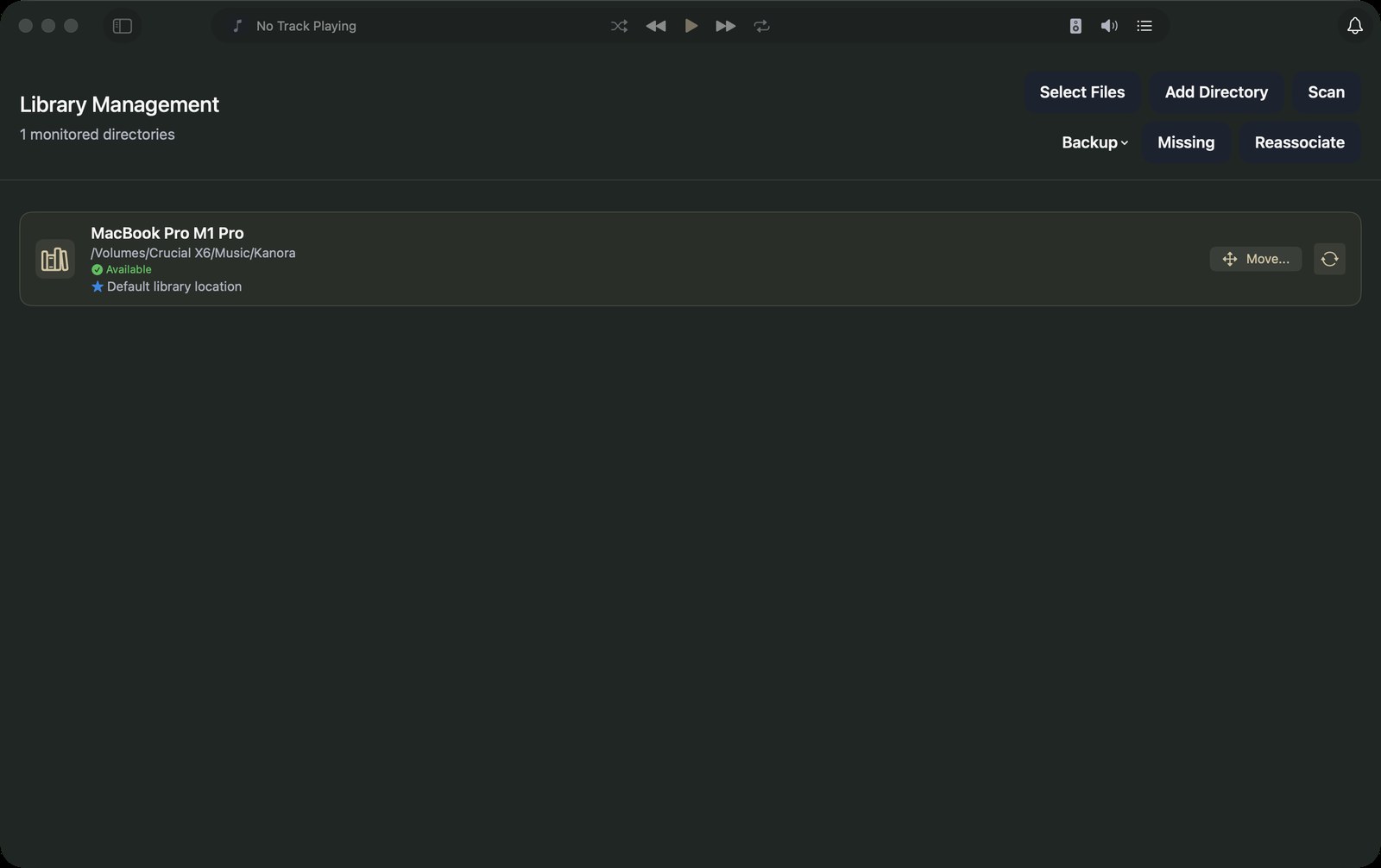
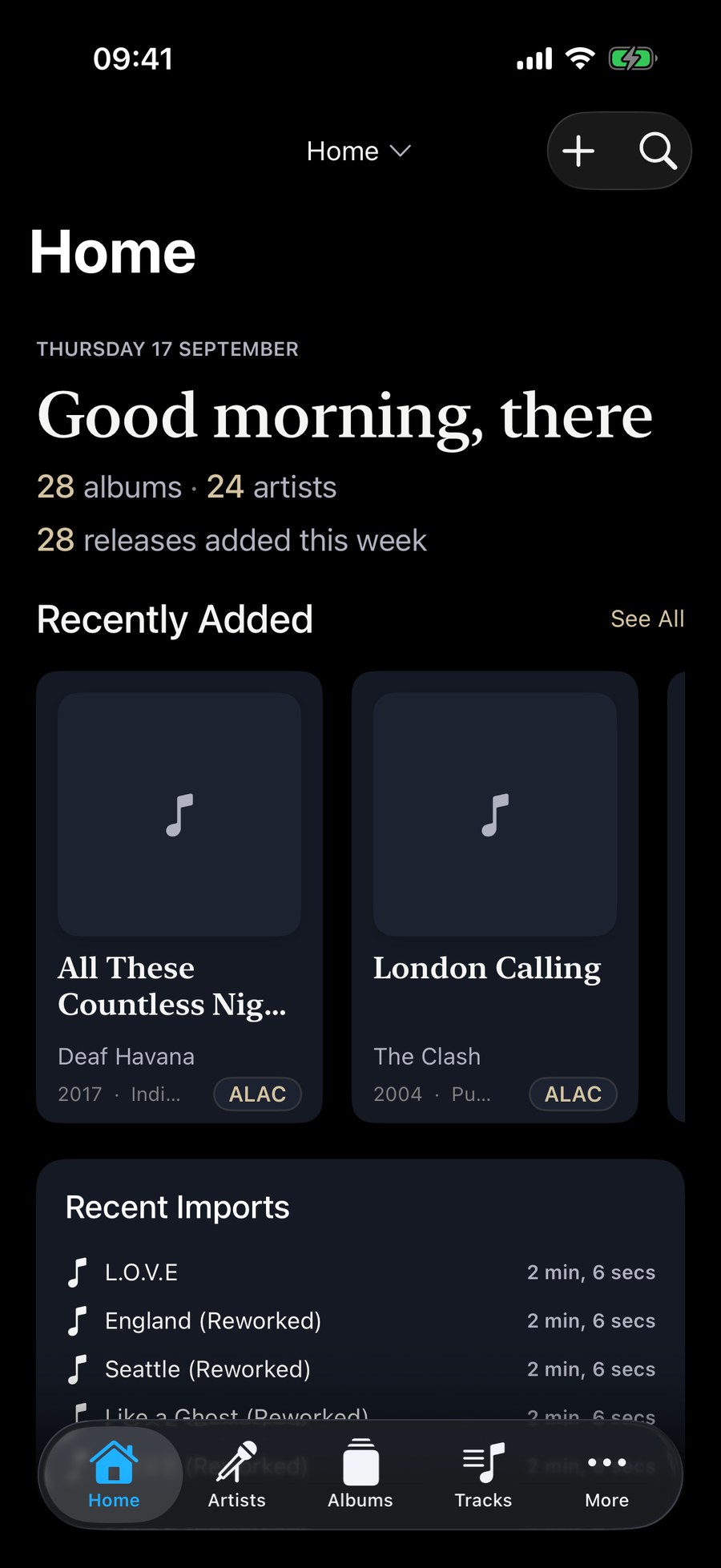
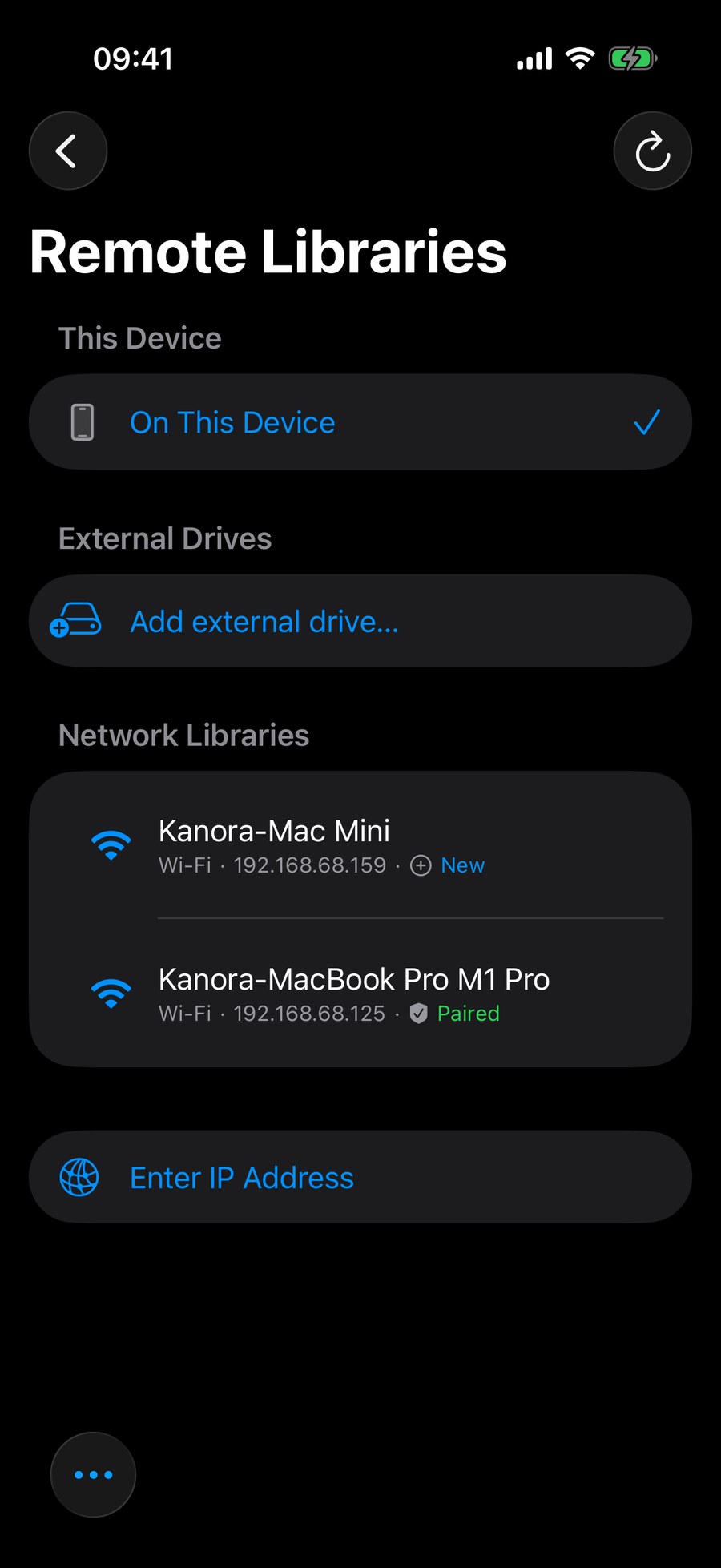
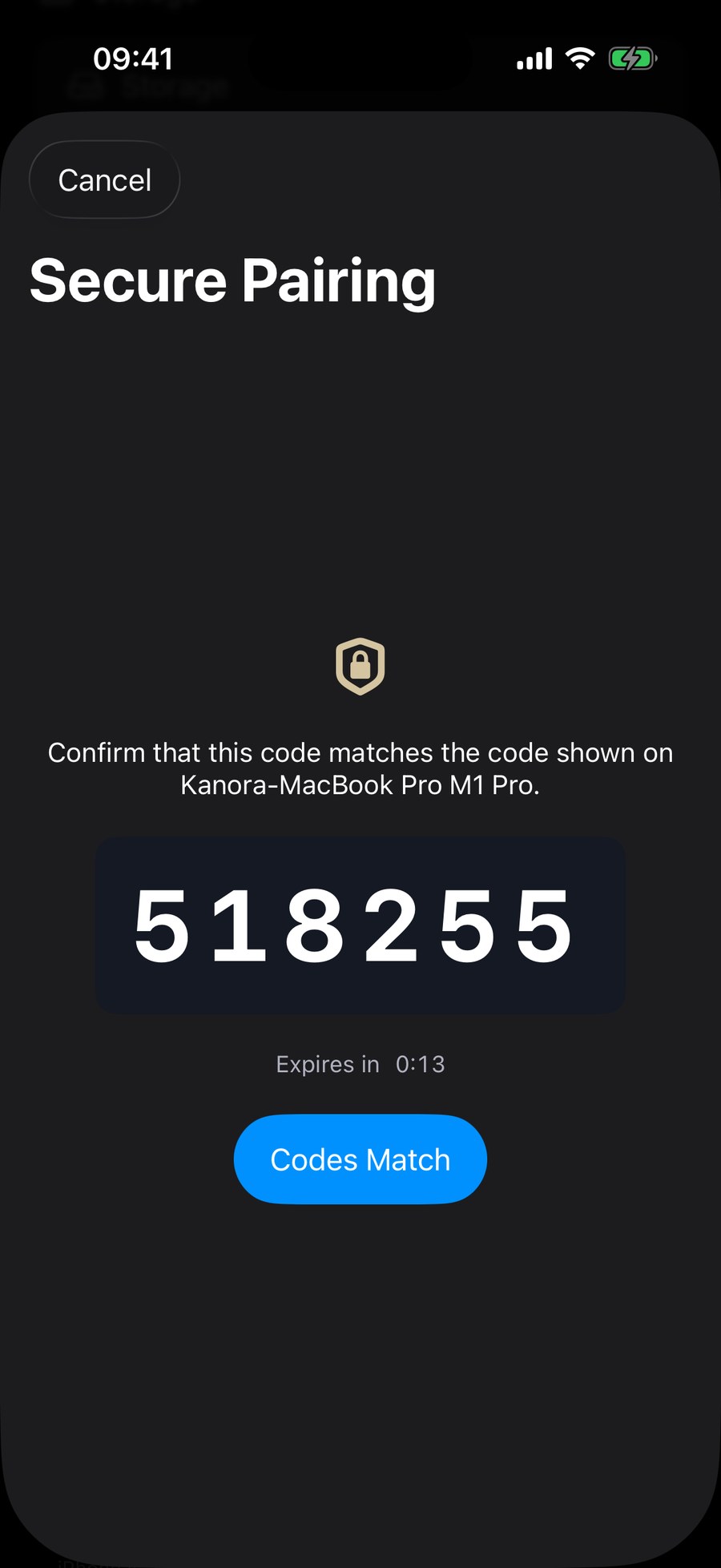
Captures of the current build. Status badges above still apply — a screenshot shows what runs, not what is finished.
What you can do
Ownership by default means the software is expected to fit around the collection you actually have, not the collection a service is willing to lease back to you this month. Files can stay where you put them. A drive is still a drive, not a cache. A disc rip is still your copy, not a temporary sync shadow. If you record a pressing or import a folder you have lived with for years, the app should behave like it understands that those objects belong to you before they belong to the software.
That sounds almost obvious until you compare it with the dominant model. Streaming services are built on access, not possession. Rights deals shift. Albums disappear. Greyed-out tracks appear in playlists that used to feel stable. You keep paying, but what you are paying for is continued permission, not durable ownership. Kanora is being built on the opposite assumption: if the music matters enough to organise properly, it matters enough to remain yours even when the wider market moves on.
Why it matters
Music software often confuses convenience with permission. The interface is smooth, the recommendations are good enough, and the whole arrangement is designed to make you forget that you do not actually control the collection. If a label pulls a release, if a catalogue version changes, if a service shuts a door, or if a subscription ends, you are reminded very quickly that access was never the same thing as ownership.
That is why physical media still matters here. Discs, tapes, and records are copies you can keep, back up, revisit, and share in ordinary human ways.
Streaming Versus A Library
Streaming is brilliant for discovery, breadth, and low-friction listening. The problem starts when it becomes your only relationship to music. Once the service is the library, your taste, your memory, and your history with certain albums all become dependent on access remaining available under terms you did not set. Even the language gets slippery. People talk about "my library" when what they often mean is a licensed view over someone else's catalogue.
Kanora is trying to reintroduce a harder-edged idea of a library without turning it into a museum piece. You can still browse quickly, sync, route playback around the house, and use modern devices. The difference is that the convenience is supposed to sit on top of ownership rather than replacing it. A library should feel like a durable object in your life, not like a monthly relationship with a terms-of-service page.
Status
This philosophy already shows up in the product more as behaviour than as slogan. Managed local storage, clear file-presence states, remote access through your own network, recording imports that become proper library assets, and a refusal to frame everything as a subscription-friendly cloud convenience are all part of the same line of thought.
The remaining work is mostly about consistency and depth. Every path, from metadata edits to remote downloads to future archival features, has to reinforce the same point: the music is here because it is yours.
CD ripping
CD imports include MusicBrainz lookup, artwork fetching, release selection, duplicate warnings, and multi-disc handling.
Metadata and artwork
Track, album, artist, and bulk editors help you clean up a collection without blind automatic changes.
Analog to AirPlay
Live input monitoring with device selection and routing, aimed at letting a physical source move through the same playback system as the rest of your library.